
B2B Brand Strategy · Professional Trust
Huaxin Denture: Turning Technical Capability into B2B Trust
How Wayne translated a dental manufacturer’s expertise into positioning, brand assets, training, events and practical sales tools.
The Challenge
Huaxin had substantial dental-manufacturing and service capability, but much of that expertise was difficult for prospective customers to see and compare.
In a B2B healthcare supply chain, a buyer is not selecting a logo. Dentists and dental organisations are assessing reliability, communication, technical support and the risk attached to every patient case. A broad description of manufacturing capacity did not give the sales team a sharp reason for customers to choose Huaxin.
The business needed a strategic centre that could guide brand expression, service design and commercial communication—not a visual refresh in isolation.
The China Market Insight
B2B trust is built when expertise becomes observable at each point of the buying process. Buyers need to understand who the company is for, which problem it is equipped to solve and how its promise will be supported after the order.
Research and interviews redirected attention to the dentist as the critical service customer. The dental laboratory’s value was not limited to producing a component. Its capability could help dentists deliver more reliable, efficient and supported patient care.
This changed the strategic question from “How can Huaxin look more professional?” to “How can Huaxin make its professional value easier for dentists to understand, experience and use?”
Strategic Decision
Wayne established Digital Denture Expert as the strategic position. It made the company’s investment direction and expertise clearer while providing a practical standard for future service and communication.
The position was supported by a customer-centred operating idea: focus the organisation on helping dentists. This gave internal teams and external audiences a shared point of reference and turned a technical category into a more legible service relationship.
The decision also set a test for every application. Packaging, training, events and sales materials had to demonstrate expertise, not merely display a new identity.
Wayne’s Work
Wayne connected business strategy with the tools used in the market:
- leadership and sales-team interviews;
- customer and buying-process analysis;
- B2B strategic positioning and messaging;
- a verbal and visual brand-asset system;
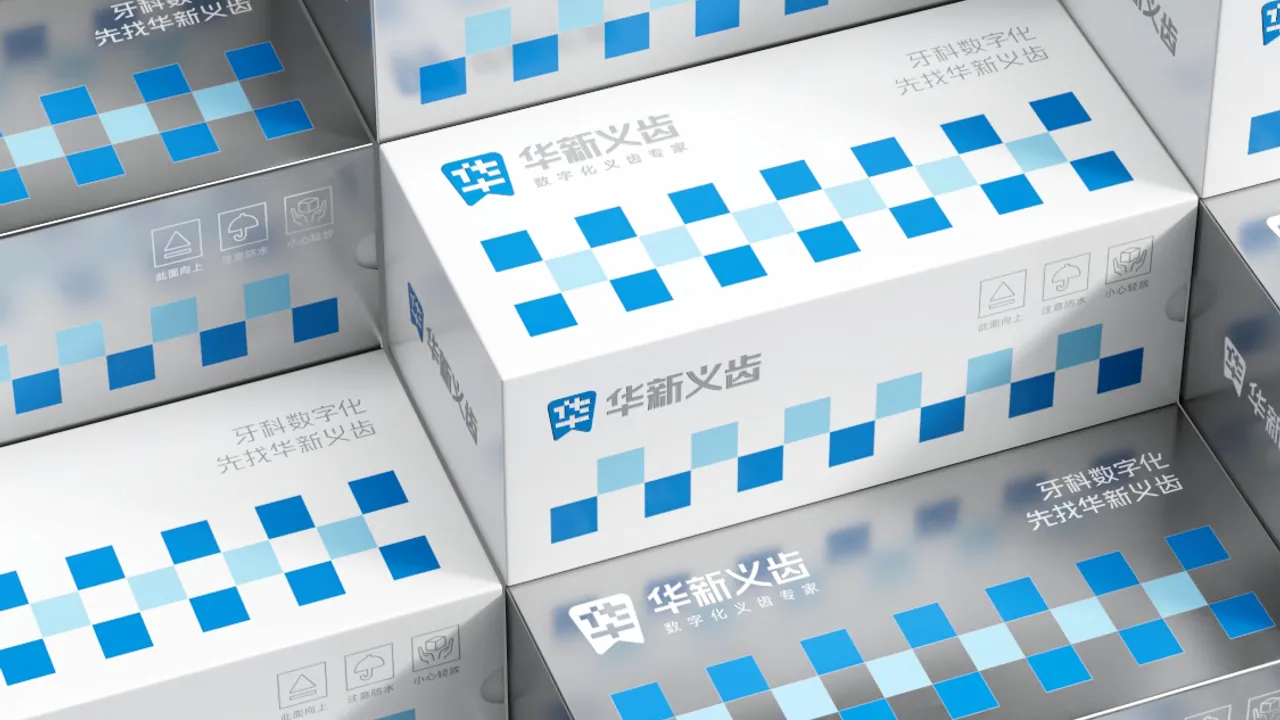
- product-packaging and information applications;
- dentist education and training concepts;
- event and conference communication;
- sales presentation and relationship materials;
- guidance for consistent use across commercial touchpoints.
The work treated marketing and sales as one trust-building system. A positioning statement mattered only if a salesperson, dentist or partner could recognise its meaning in a real interaction.
Market Application
Huaxin applied the strategic and brand system across packaging, training content, professional events and sales-support material.
These applications gave the sales organisation a more consistent way to frame technical expertise. They also helped professional audiences encounter the same idea across different moments—from first introduction and product information to learning and ongoing relationship activity.
Verified Outcome
The verified outcome is a strategic position translated into active B2B tools: brand messaging, packaging, professional training, event communication and sales materials were produced and used.
No revenue, ranking or customer-growth figure is presented here. Those outcomes depend on many operating factors outside a brand project. The supported claim is that previously diffuse expertise became a coherent, applied system for professional trust and selling.
What International Brands Can Learn
China B2B market entry is rarely solved by corporate translation alone. Technical buyers and channel partners need evidence that lowers professional and organisational risk.
International B2B brands should identify the human decision-maker behind the account, define the problem they help that person solve and carry the answer through product information, training, sales tools and service behaviour. Trust becomes commercially useful when it is designed into the full buying experience.